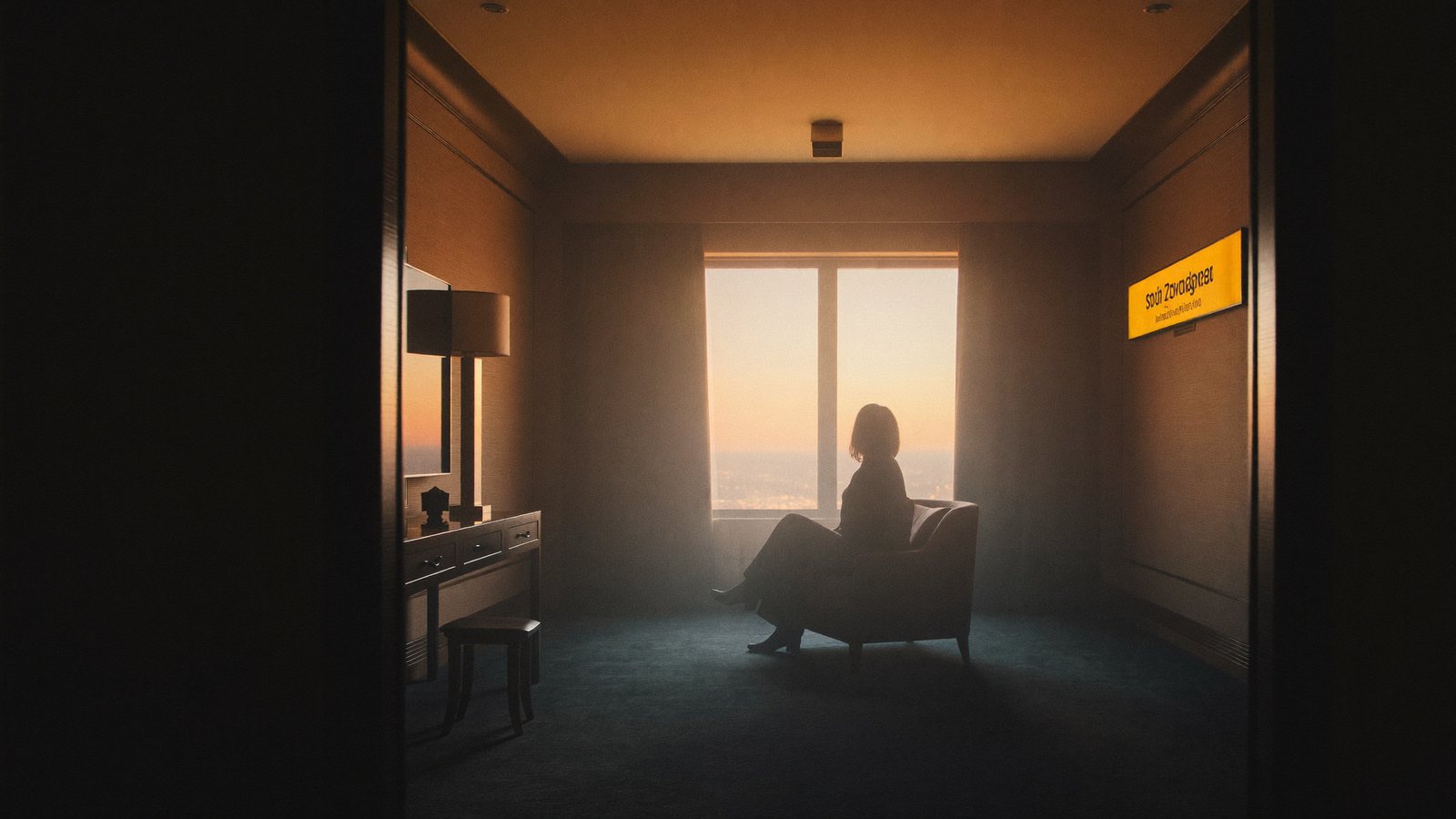
Hotels were the slowest vertical to pick up AI marketing. That gap is now your edge.
E-commerce moved to AI ad buying years ago. Most hotels still point ads at homepages. Bookings still die on hand-typed call sheets. OTAs still skim 18 to 25 percent of every room night.
In 2026 the gap closes fast. AI calling agents handle calls at human quality. Tight digital funnels turn search intent into direct bookings. This is the playbook we run at YARD. Every hotel in your set will run it by 2027.
This post is for the GM, the owner, and the marketing head. You run a 30 to 300 key property. You have strong reviews. You have weak direct share. You want to fix it this year.
Quick Facts: Hotel marketing in 2026
- OTAs charge 18 to 25 percent per booking. Booking.com is the largest. (Source: Skift, 2025 — skift.com/research).
- Direct bookings sit near 28 percent of room nights at branded hotels in 2025. (Source: Phocuswright, 2025 — phocuswright.com).
- Google Hotel Ads moved free booking links to a wider rollout in 2025. (Source: Google, 2025 — blog.google/products/travel).
- The brand doubled direct room nights from 795 to 1,600 in year one.
- The brand lifted Google impressions from 10K to 64K per month, a 6x gain.
Why hotels lose the margin war
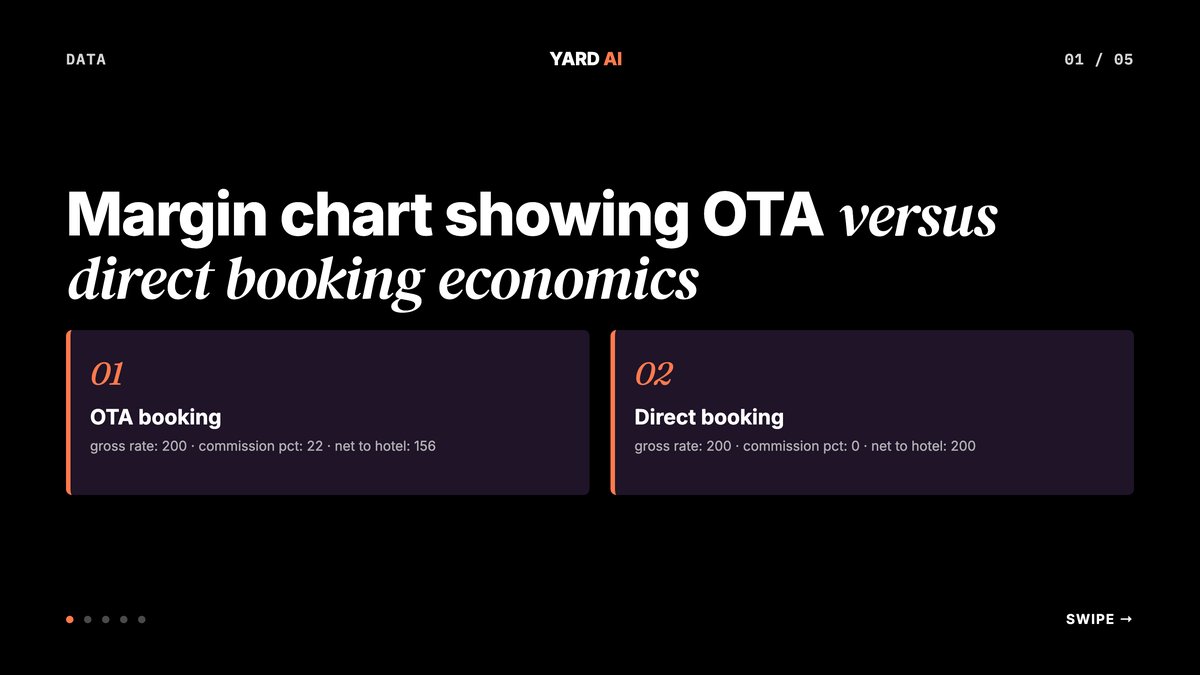
Most properties run an OTA-first stack. The booking comes in. The OTA keeps a fifth of it. The hotel pays for the room, the staff, and the food. The margin walks out the door.
A 1 percent shift from OTA to direct moves real money. On a 100-key hotel, that is often 8K to 15K dollars a month. Stack 12 months. Stack 5 properties.
CBRE flagged direct booking share as the top margin lever for 2026. (Source: CBRE Hotels Research, 2025 — cbrehotels.com). STR tracks the same trend. (Source: STR, 2025 — str.com).
Two trends now do the heavy lifting:
- AI calling agents close calls 24 by 7.
- Digital funnels feed direct bookings, not OTA listings.
Both run on the same goal. Lift direct booking share. Protect margin.
The legacy stack also leaks data. OTAs own the guest email. They own the cohort. They own the rebooking trigger. You only see the night booked. That blind spot kills loyalty work.
Q: Why does a 1 percent OTA-to-direct shift matter so much?
A: OTAs charge 18 to 25 percent per booking. Direct keeps almost all of it. On a 50-key hotel doing 100K a month, that 1 percent is roughly 2K back to your P&L. Stack 12 months and the math is clear.
The AI calling agent stack: Bland, Vapi, Retell
Three vendors lead the 2026 hotel build. Each fits a slightly different team.
Bland AI
- Best for high call volume.
- Pricing starts near 9 cents per minute.
- Latency under 800 milliseconds in tests.
- Strong outbound call API.
- Good for follow-up campaigns at scale.
Vapi
- Best for fast prototyping.
- Pricing 5 to 12 cents per minute, model dependent.
- Latency near 600 to 900 milliseconds.
- Friendly developer setup.
- Good for inbound front-desk overflow.
Retell AI
- Best for tuned voice quality.
- Pricing 7 to 15 cents per minute.
- Latency near 700 milliseconds.
- Strong knowledge base and tool calls.
- Good for full booking flows with PMS calls.
Research shows latency under one second is the bar for natural call flow. Above that, callers feel the lag. (Source: Bland AI docs, 2026. bland.ai). (Source: Vapi docs, 2026. vapi.ai). (Source: Retell AI docs, 2026 — retellai.com).

A 50-key hotel runs the stack for 300 to 1,500 dollars a month. Call volume drives the bill. So does your average call length.
A sample prompt for the front-desk agent
Role: You are Maya, the booking host for [your hotel].
Tone: Warm. Direct. Short sentences.
Knowledge: room types, rates, drive time, signature experiences.
Tasks:
1. Greet the caller by name if known.
2. Confirm dates, party size, room type.
3. Quote the rate from the rate card.
4. If they pause, offer the next free date.
5. Send the payment link by SMS via the booking tool.
6. If a question is off-script, hand off to a human.
Hard rules: never invent rates. Never promise a discount.
A good prompt is short. It names the role. It lists the tools. It draws the line for handoff.
According to early case data, voice quality in 2026 is solid. About 60 to 70 percent of callers do not flag the agent as AI. The agent runs 24 by 7. It handles 50 plus calls at once. It never has a bad day.
Q: Will AI calling agents replace my reservations team?
A: No. They handle the first 80 percent of routine calls. That means date checks, room types, simple add-ons. Your team owns complex bookings, groups, and upsells. The agent buys the team time, not the team itself.
The 5-stage digital funnel
OTA dependency is a funnel problem, not an ad problem. Fix the funnel and the OTAs shrink on their own.
We run hotels on five stages. Each has its own tool. Each has its own metric.
Stage 1: Awareness — Meta + Google Display
- Goal: warm cold travellers in your feeder cities.
- Tools: Meta Advantage+, Google Demand Gen, YouTube Shorts.
- Creative: 6 to 9 second hero clips. Room, view, food.
- Audience: lookalikes off past direct bookers.
- Metric: 3-second view rate and saves.
Meta now serves more travel intent in feed than in 2024. (Source: Meta for Business, 2025 — business.meta.com).
The trick on Meta is creative volume. Ship 8 to 12 new clips a month. Cut the worst three each week. Let the algorithm find the winner.

Stage 2: Consideration — Search + landing CRO
- Goal: catch active intent and convert to enquiry.
- Tools: Google Search, Performance Max for hotels.
- Landing page: one page per property, not a group homepage.
- Form: name, phone, dates. Three fields. No more.
- Metric: enquiry rate from paid clicks. Aim for 4 to 7 percent.
A property page beats a homepage every time. The hero shot sells the room. The form sells the call.
A study found mobile carries more than 70 percent of hotel search in 2025. Your page must load in under 2 seconds on a phone. Most hotel sites do not.
Stage 3: Conversion — Direct booking engine + Google Hotel Ads
- Goal: close the booking on your own site.
- Tools: a fast booking engine, Google Hotel Ads, free booking links.
- Booking engine: mobile-first, 3-click checkout.
- Google Hotel Ads: bid on your own brand and feeder city queries.
- Metric: direct booking share of total room nights.
Google opened free booking links wider in 2025. (Source: Google Travel, 2025 — blog.google/products/travel). That alone shifts 3 to 5 percent off OTAs if your engine is set up right.
Pick a booking engine that talks to your PMS. Cloudbeds, Mews, and SiteMinder all ship the open API. Without it, the AI agent can not write a real reservation.
Stage 4: Retention — Email + WhatsApp
- Goal: keep guests warm between stays.
- Tools: Klaviyo or HubSpot, plus WhatsApp Business.
- Cadence: pre-stay tips, post-stay thank you, season teaser.
- WhatsApp: opt-in only. One message a month max.
- Metric: repeat booking rate within 12 months.
WhatsApp open rates run near 90 percent in India. Email runs near 30 percent. Use both.
A short flow works best. Welcome on day zero. Tip on day three of the stay. Review request on day two after checkout. Season teaser at month four. Five touches. No more.
Stage 5: Loyalty — Rebooking flow
- Goal: turn one-time guests into repeat guests.
- Tools: AI calling agent for season teasers, loyalty tier on the booking engine.
- Trigger: 60 days before the next high season.
- Offer: early bird rate for past guests only.
- Metric: share of room nights from past guests.
Q: Where do most hotels lose the funnel?
A: Stage 2 and Stage 3. The ad clicks land on a group homepage. The form has 8 fields. The booking engine takes 6 clicks. Each step kills 30 to 50 percent of intent. Tighten those two stages first.

How AI calling agents change a booking call
Old call flow:
- Phone rings at 11 pm.
- No one picks up.
- The traveller books on Booking.com instead.
- You pay 22 percent.
New call flow:
- Phone rings at 11 pm.
- AI agent picks up in two rings.
- Agent confirms dates, room type, and rate.
- Agent texts a payment link by SMS.
- The booking lands direct.
The shift is not about replacing the team. It is about catching the bookings the team can not catch. Most hotel front desks staff for 9 am to 6 pm. The bookings come in at 9 pm to 1 am. That gap is the leak.
A study found mobile travel research peaks between 8 pm and midnight. (Source: Phocuswright, 2025 — phocuswright.com). The AI agent works the same hours your guest is shopping.
Where the agent hands off to a human
Set the handoff rule short. Hand off when:
- The caller asks for a group rate above 5 rooms.
- The caller asks for a wedding or event.
- The caller flags a complaint about a past stay.
- The caller asks a question the agent has no answer for.
Everything else stays with the agent. That is 80 percent of calls.
How to train the agent in week one
- Day 1: feed the agent your rate card, room types, and amenities.
- Day 2: feed the agent your top 30 guest questions and the answers.
- Day 3: connect the agent to the PMS via API.
- Day 4: run 20 test calls in-house. Note every gap.
- Day 5: tune the prompt. Tighten the script. Go live with low traffic.
By week two, the agent handles half your inbound. By week four, it handles the bulk.
What hotel ad changes mean for 2026
Google rolled out free booking links to more hotel partners through 2025. (Source: Google Travel, 2025 — blog.google/products/travel). The free link sits next to paid Hotel Ads. It can shift 3 to 5 percent of bookings off OTAs at zero ad cost.
The catch: you need a fast booking engine that meets the spec. You also need to bid on Hotel Ads to keep the slot warm. Most hotels skip both and lose the slot to OTAs.
Meta also tightened the travel intent signal in 2025. Lookalikes off your past direct bookers now perform 20 to 30 percent better than broad targeting. The sample size needs to be 500 plus past direct bookers to work well.
Skift tracks both shifts. (Source: Skift, 2025 — skift.com/research). The trend lines all point at direct bookings. The hotels that move first hold the gain.
What stops hotels from shipping this
Three failure modes show up in every audit.
Failure 1: PMS does not talk to the stack. Many hotel PMS systems still run on-prem. Without an API, the AI agent can not book. Pick Cloudbeds, Mews, or Stayntouch. Or budget for the bridge in year one.
Failure 2: Brand fear of AI voice. Owners worry guests will hate AI on the phone. The 2026 voice quality is good. Most callers do not flag it. The bigger risk is no one picking up at 11 pm.
Failure 3: SEO treated as one-time. Hotel sites get built once and freeze. The winners ship new pages each quarter. New experiences. New seasonal angles. New local signals.
A fourth one shows up too. Owners want a single big launch. Hotels do not work that way. Ship one stage. Measure. Ship the next. The compounding is the point.
How the cost math pencils out
A 50-key hotel running the full stack in 2026 spends in this range:
- SEO and content: 2K to 5K dollars a month.
- Paid Search and Meta: 5K to 15K dollars a month.
- AI calling agent: 300 to 1,500 dollars a month.
- CRM and automation: 200 to 800 dollars a month.
Total: 8K to 22K dollars a month for the stack.
Direct booking gains on a 100K-a-month property usually clear 15K to 22K a month. The math pencils in month one. It compounds in year two.

The break-even is fast. Most properties move into the green inside 90 days. The rest of year one is pure margin recovery.
The the resort playbook (real numbers)
the resort is a niche destination resort. The brief was hard. Niche product. Low search volume. Heavy OTA share. Short demand window.
We ran the same five-stage funnel. We added an AI calling agent for inbound enquiries. The the region market drove most of the demand.
Results in 12 months:
- Direct room nights: 795 to 1,600. A 2x lift.
- Google impressions: 10K to 64K per month. A 6x lift.
- OTA share dropped. Margin moved up.
The unlock was the experience query layer. Travellers do not search "luxury hotel near Sariska". They search "signature experience resort India". We built one page per query. We ran tight Search ads on the same intent. The AI agent picked up at 11 pm when the family had time to call.
another lodging brand ran the same stack across 4 heritage desert properties. The season is only 6 to 8 months. We still lifted direct room nights from 450 to 797. That is a 56 percent gain in a tight window.
Both wins came from the same idea. Tight funnel. AI calling agent on the phone. Fewer leaks.
The YARD playbook for hospitality
We run hospitality as a P3 Industry Playbook track. The pattern is set.
- Month 1: SEO and paid search foundation.
- Month 2: funnel fix. New landing pages. New booking engine flow.
- Month 3: AI calling agent live. PMS connected. Scripts tuned.
- Month 4 and after: weekly reviews. Quarterly content drops.
We also run Real Estate, Healthcare, B2B Tech, and E-commerce tracks. Each has its own playbook. Each has its own KPI tree.
If your property has strong reviews but weak direct share, we can audit it. We will ship the 90-day plan and the first creative batch in week one.
Download the full Hotel Marketing Playbook on our site. See how we'd apply this to your vertical. Visit yardagency.ai to start.
Pick the one leak that hurts most this season. We will help you patch it. The rest follows in months two and three.
The hospitality book at YARD spans multiple lodging brands. The pattern repeats. Strong product. Weak direct share. Tight 90-day fix. Then a year of compounding gains.
What we ship in the first 30 days:
- A funnel audit with the top three leaks named.
- A keyword map across branded, destination, and experience queries.
- A first AI calling agent prompt tuned for your rate card.
- A landing page draft for your top-performing room type.
- A weekly metric pack so the GM sees the trend each Monday.
The metrics that matter each month
Run a tight scoreboard. Five numbers, one page, every Monday:
- Direct booking share of total room nights.
- Cost per direct booking from paid channels.
- Inbound call answer rate. Aim for 95 percent.
- Booking engine conversion rate from paid clicks.
- Repeat booking rate from past guests.
Skip vanity metrics. Skip total impressions. Skip ad spend in isolation. The five above are the ones that move margin.
A good rule: if a number does not point at direct booking share, it is a side metric. Track it, but do not steer the ship by it.
The bottom line
Hotel marketing in 2026 is not about bigger ad budgets.
It is about three moves. A search and social funnel that finds the right traveller. A booking flow that turns intent into a paid stay. An AI calling agent that closes calls 24 by 7.
Move on this in 2026 and you can hit 2x direct bookings in 12 months. Wait, and the OTAs keep skimming 18 to 25 percent of every room night.
Pick one stage this quarter. Fix the biggest leak. The rest follows.
FAQ
Q: What is an AI calling agent for a hotel?
A: An AI voice agent that handles inbound and outbound phone calls. It answers in plain speech. It knows your room types and rates. It can close a booking or pass the call to a human.
Q: How much do AI calling agents cost in 2026?
A: Bland AI starts near 9 cents per minute. Vapi sits around 5 to 12 cents per minute. Retell runs 7 to 15 cents per minute. A 50-key hotel pays 300 to 1,500 dollars a month at typical call volume.
Q: Why focus on direct bookings over OTAs?
A: Margin. OTAs take 18 to 25 percent per booking. Direct keeps the full rate. We doubled direct room nights from 795 to 1,600. That saved 25 to 30 percent of revenue.
Q: What is the 5-stage digital funnel for hotels?
A: Awareness with Meta and Google Display. Consideration with Search and a tight landing page. Conversion with a direct booking engine and Google Hotel Ads. Retention with email and WhatsApp. Loyalty with a rebooking flow.
Q: How does this work for seasonal hotels?
A: another lodging brand runs a 6 to 8 month season across 4 heritage properties. We lifted direct bookings from 450 to 797. The funnel ran year-round. AI agents handled off-season calls and warmed up next-season demand.
Q: Will AI calling agents replace my reservations team?
A: No. They handle the first 80 percent of routine calls. That covers date checks, room types, and basic add-ons. Your team owns complex bookings, group leads, and upsells.
Q: How fast does the playbook show results?
A: Search and SEO show first lift in 30 to 45 days. The AI agent shows up in 60 to 90 days as it learns booker patterns. A 2x direct booking lift in 6 to 12 months is realistic.
Insights from Our Experts
Explore our latest articles on digital marketing strategies.